Table of Contents
The Origin of the Southdown Estate
- In 1899, a new development company bought 135 acres of farmland and coppice east of Otterbourne Road from the Dean of Winchester Cathedral.
- Richard Croker uncovers the colourful rise — and frequent stumbles — of Shawford South Down Estate Ltd, the personalities behind it, and the early residents who shaped what we now call Southdown.
After his talk, Richard continued his research into the history of Southdown Estate.
Several people provided more information.
Richard has summarised his original talk and his new findings in a series of articles for the Compton & Shawford Parish Magazine.
The Origins of the Shawford South Down Estate – Part 1
from the Compton & Shawford Parish Magazine June 2026
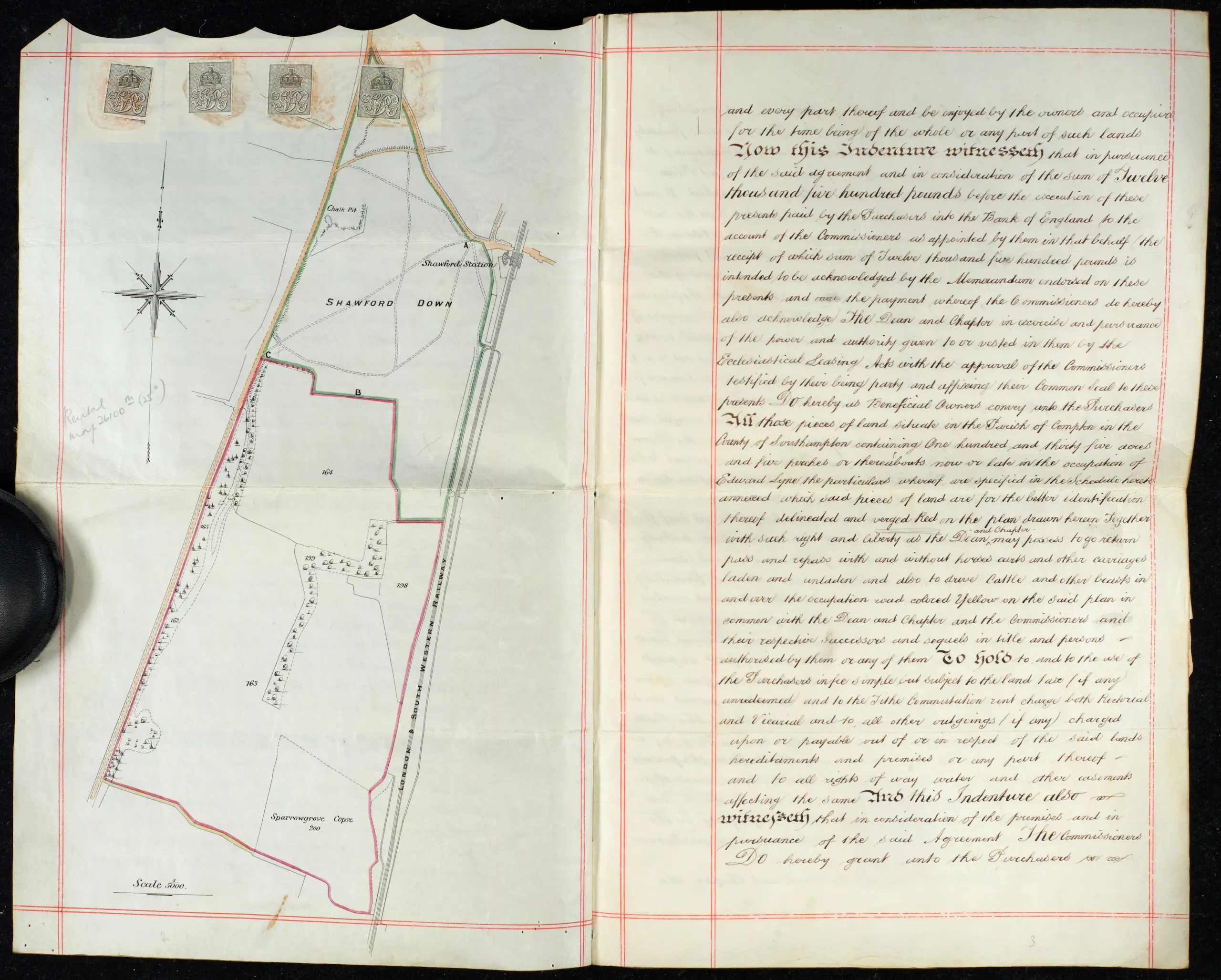
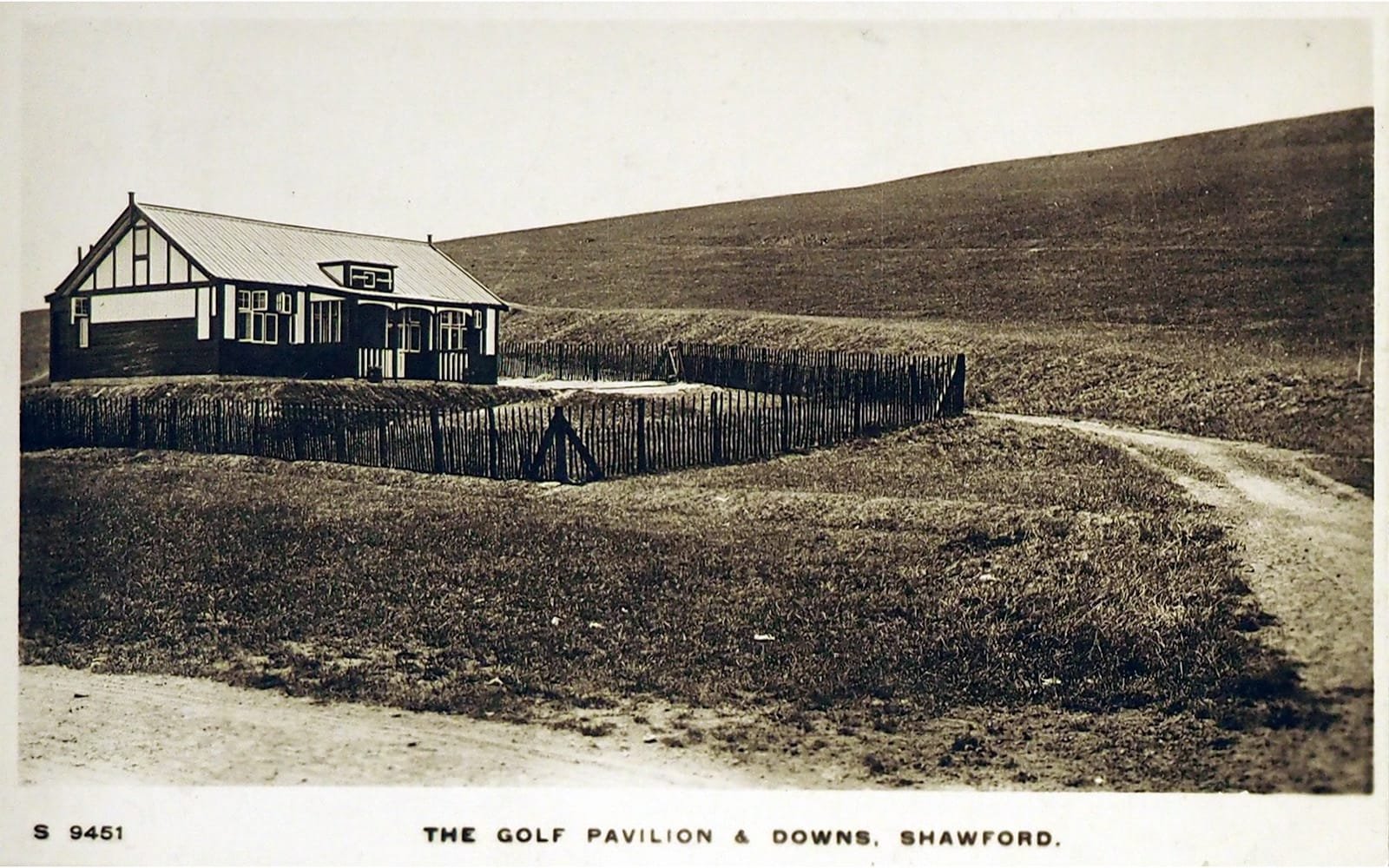
In 1899 a company called the Shawford South Down Estate Limited acquired for development, 135 acres of farmland and copse between the railway and the Otterbourne Road to the south of what is now Shawford Down. The Down was to be protected from development. The cost was £12,500 – equivalent to £3 million in today’s money. Some roads were laid out and a residential development begun – although seemingly in a haphazard manner. Building has continued intermittently over the last century and a quarter and goes on today.
Who was responsible and what did they intend? Why did it turn out like it did?
The land had been owned by the Dean and Chapter of Winchester Cathedral and farmed by Edward Lyne of Compton Manor Farm. Perhaps the project was the Church’s idea. Documents show the Dean saw development as being to the ‘permanent advantage’ of the Church estate – the same owners had transferred 10 acres of land now known locally as ‘the Island’ in Shawford (just up the hill from the new railway station) for development in the 1880s.
Approximately 24 dwellings had been erected here within a few years. It may not be a coincidence that two of the ‘promoters’ of the South Down estate served the Cathedral in their professional capacities.
The small riverside hamlet of Shawford with an inn, a mill and a few dwellings along the Itchen Navigation had been transformed when the railway station opened in 1882 : the parish of Compton & Shawford had at least doubled in size since, with most of the new population in Shawford, many with work on the railway or – facilitated by the new station – in Winchester or Southampton. The Parish Council established in 1895 had built the first Parochial Hall in the county, with the local architect giving his services free. The Island was fully built and occupied. A golf club had been started on the Down. New houses were already springing up on Compton Down. Labour – including live in domestic help – was cheap and there appeared to be a ready market for large new houses, from investors and potential owner-occupiers.
Who then were the ‘promoters’ of the South Down scheme?
The Company was incorporated in August 1899 by Morgan Price and Mewburn of 33 Old Broad St in the City of London. It seems that a Thomas Morgan had contracted to buy the land in the summer of 1899. The Company was then assigned the right to acquire it, on condition that Morgan could acquire three acres of land from the Company for a ‘peppercorn’ ie. for free.
There appear to have been three prominent players, all of whom were already connected with Shawford. Thomas Morgan, 53, a timber merchant then living with his parents and sisters in Bridge Lane and who had entered into the original contract was one. John Barnes Colson, 48, the architect of the new Parish Hall and of his own house on the Island then known as Redlayne, who had a practice in Winchester, made two.
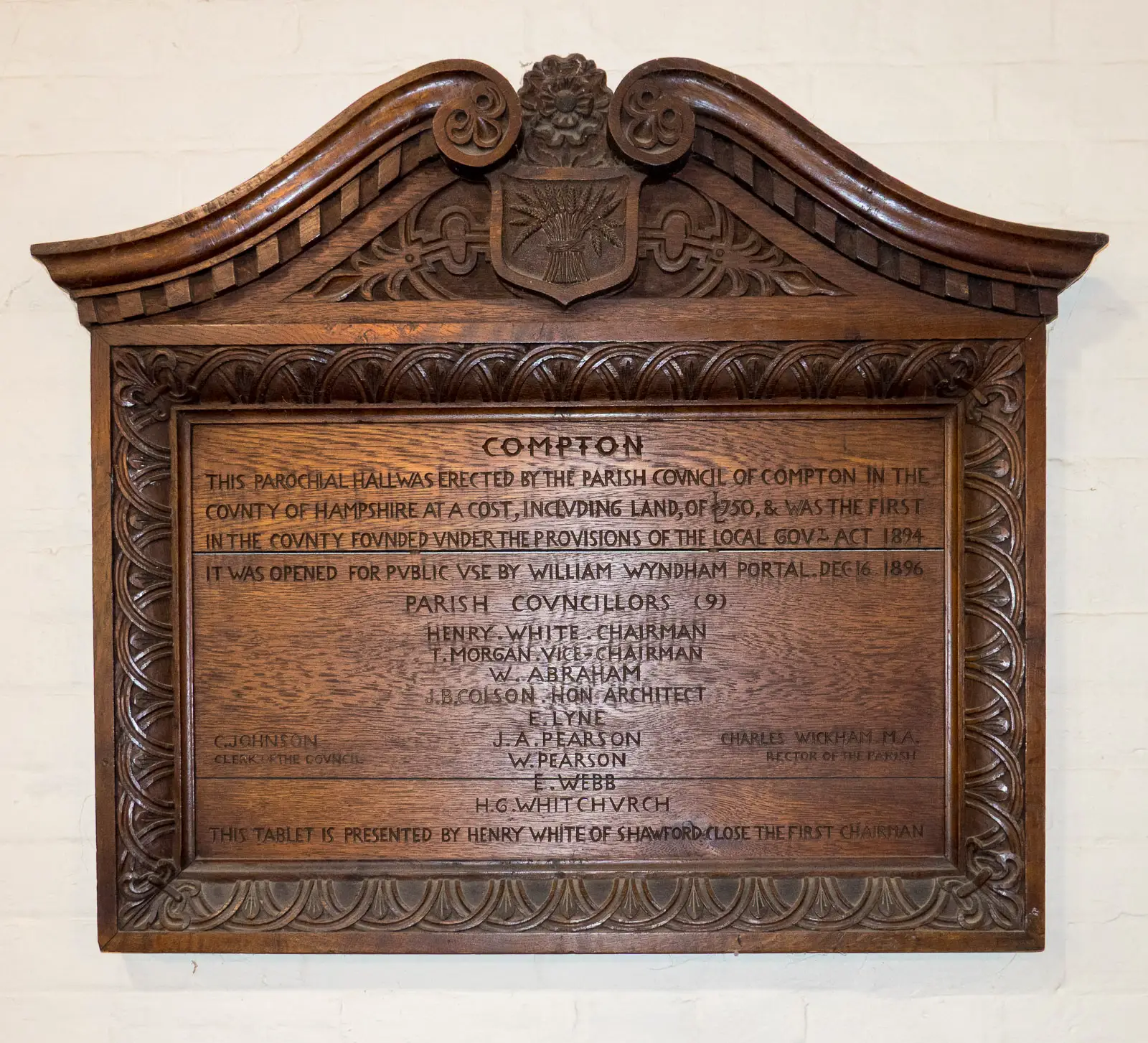
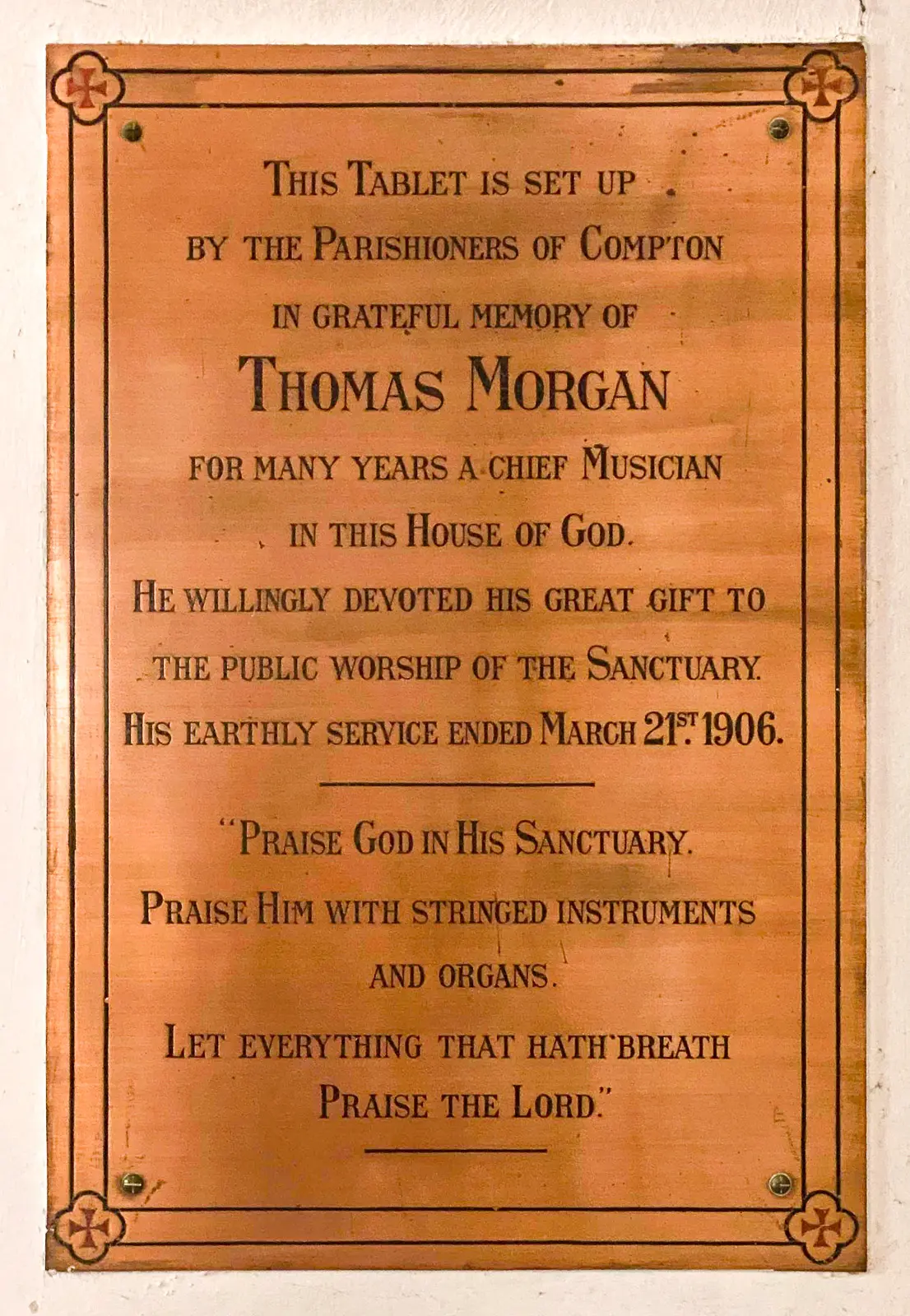
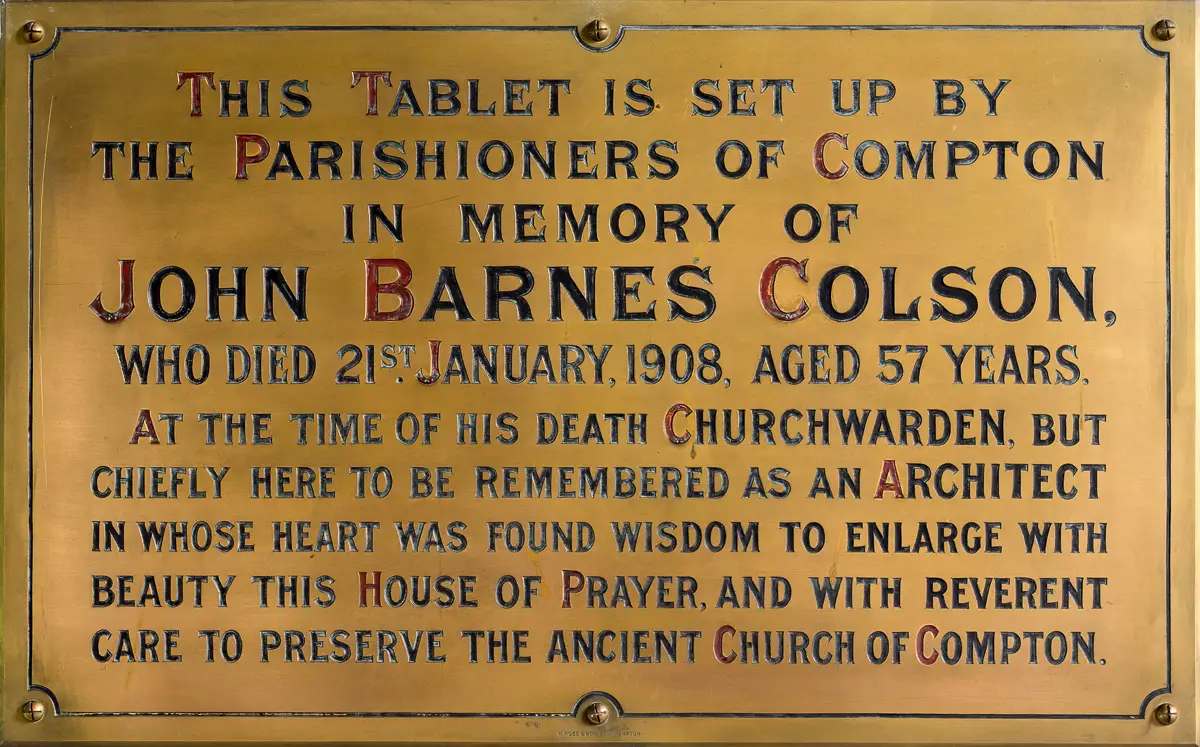
Both Morgan and Colson are commemorated by plaques in the parish church: both were churchwardens and parish councillors. Morgan was the first Chairman): Morgan was also the church organist and J.B. Colson would go on to co-design and superintend the construction of the ‘new’ church at Compton completed in 1905. Colson’s father (also John, a noted local architect responsible for many churches and schools in Hampshire and the designer of the building at West Downs which was the original King Alfred’s College) had acquired and apparently developed the Island land with his son. Colson junior had succeeded his father as architect to the Dean and Chapter.
The third ‘promoter’ was the solicitor Alfred Bowker, 29, recently the mayor of Winchester and now the owner of the Malms Farm on the other side of the railway from South Down. Bowker had also succeeded his father – as chapter clerk ie. solicitor – to the Dean and Chapter.
To be continued
Richard Croker
The Origins of the Southdown Estate 2
From the July 2026 Compton & Shawford Parish Magazine, the second of a series of articles based on Richard’s talk to the Local History Society
Alfred Bowker
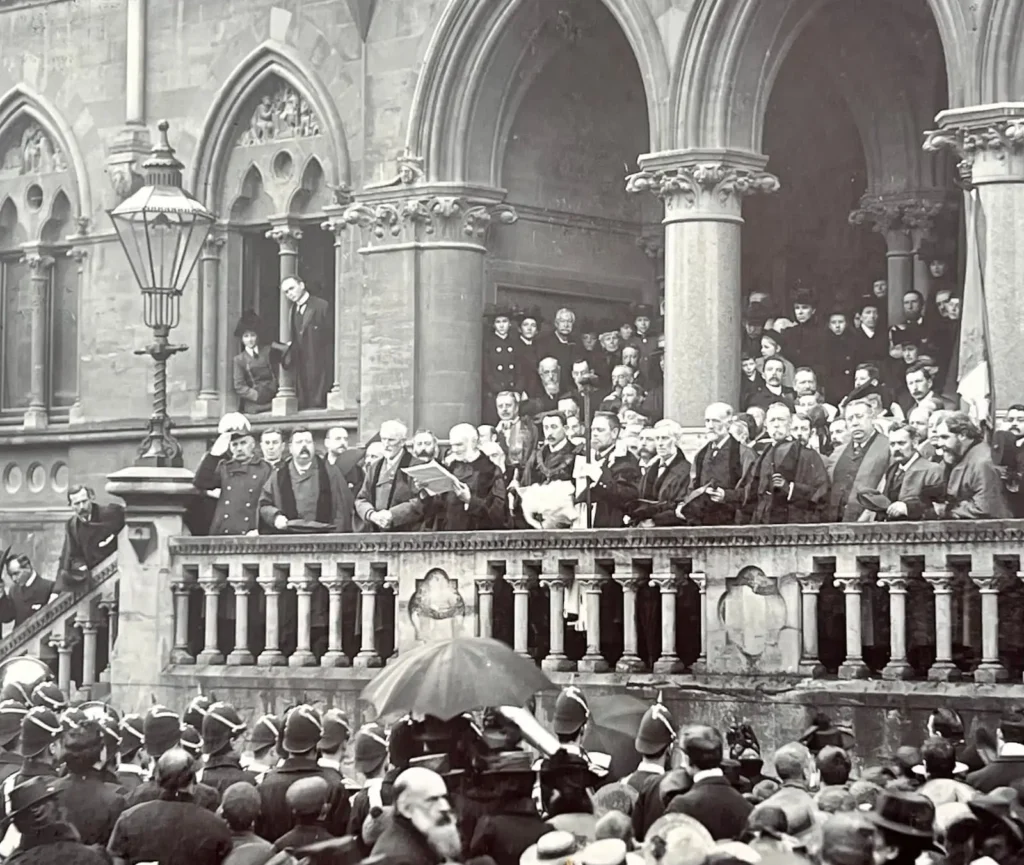
One of the three ‘promoters’ of the Estate, Alfred Bowker was said to move like an actor: he was tall and strongly built, and well connected (his father Frederick had been solicitor to the Tichborne family and acted on the famous case of the Tichborne claimant, a wapping butcher and fraudster by the name of Orton) and something of a polymath.
He was a sportsman – reputed to have skated from Basingstoke to the Thames on a frozen canal while a teenager – a prize winning dog breeder, and was later to become an author, artist and sculptor as well as the creator of a notable ‘Chinese’ garden at the Malms. In 1899 he had recently become a driving force behind the commission for Alfred the Great’s ‘millenary’ of the famous statue in Winchester by Hamo Thorneycroft . He was also behind the purchase of what is now River Park for the city – a public subscription paid for it, although the vendor was Alfred’s brother in law, the former local MP William Barrow Symonds. The land was – perhaps affectionately – known locally as ‘Bowker’s Bog’ : certainly extensive drainage work had to be carried out to make it fit for purpose. Bowker would go on to become mayor for a second time in 1901 and posthumously the grandfather of the actress Judy Bowker, at 18 the star of Black Beauty. She is one of the few film stars to have been born in Shawford!
The Morgan Family
It was not clear to me when I did the talk where the purchase monies for the estate had come from, but thanks to enquiries made by my neighbour Leigh Salkeld, I now know that Morgan, Colson and Bowker put up their own money as shareholders, along with Harry Merrill Colebrook, a corn merchant then living in Shawford, John James Burnett an elderly stockbroker and JP of Southampton, probably father to the surveyor and architect A A Burnett who then lived in Shawford and a further investor, the eminence grise of our story, William Carey Morgan. He was a solicitor with business in London and Calcutta and elder brother to Thomas. The Morgan family has an interesting history.
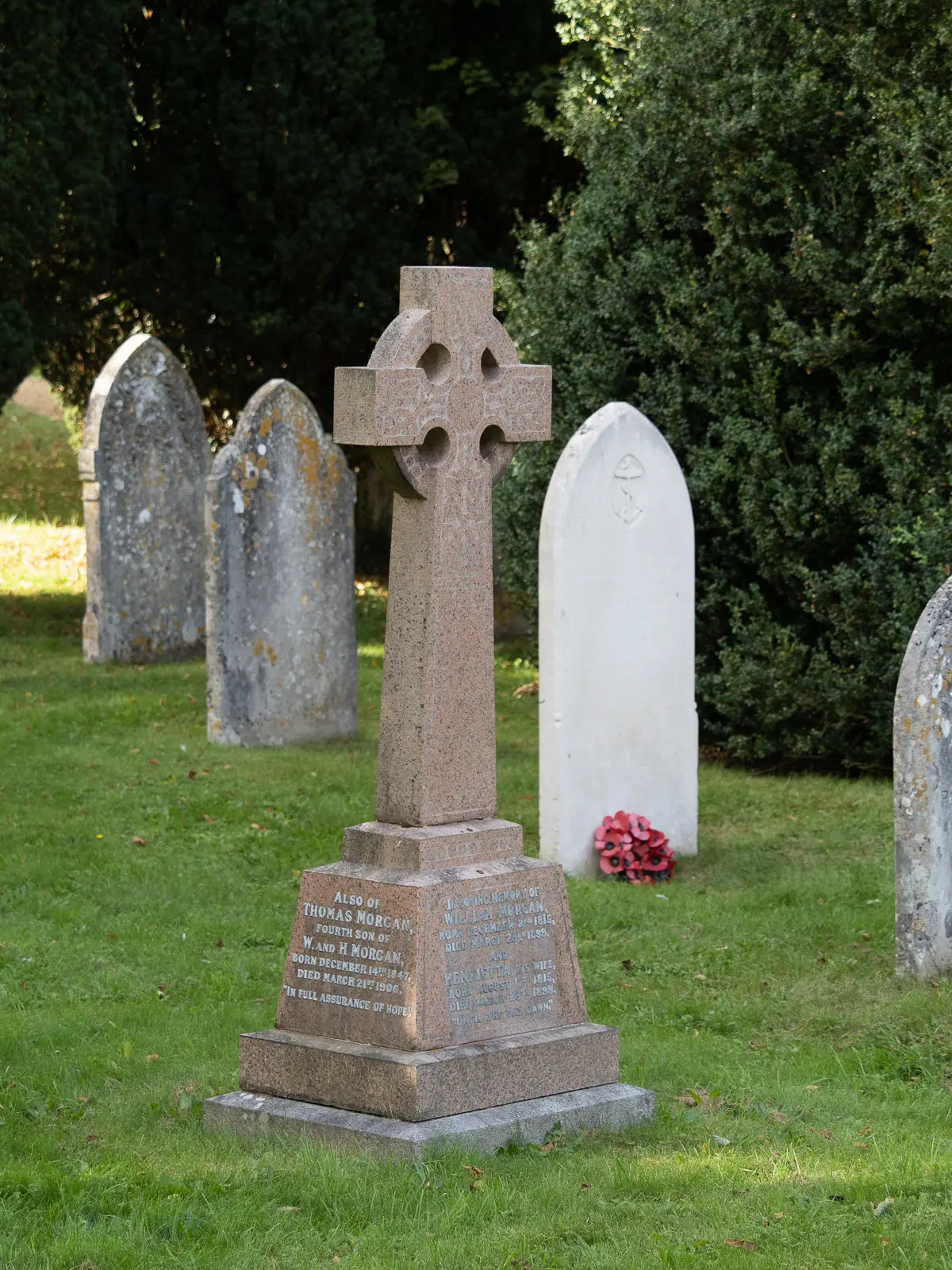
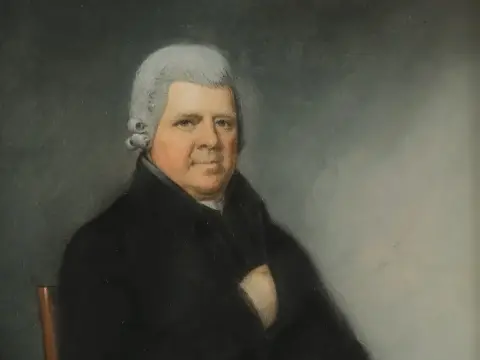
Both W C and Thomas were the grandsons of the Rev Thomas Morgan (1776-1857) a Welsh born dissenting minister who was pastor of two leading Baptist churches in Birmingham in the first half of the 19th century. He also ran a school and published tracts. He was a founder member in 1826 of the Birmingham Anti Slavery Society and a follower of the Christian missionary William Carey, the ‘Father of Modern Missions’ who had travelled to Calcutta, India in 1793 to proselytise , defying the ban on missionary activity imposed by the East India Company before 1813. Carey spent the next 40 years living in India, translating the Bible into various Indian languages and becoming Professor of Sanskrit and Bengali at Fort William College.
William Morgan (1815-1893), son of the Rev. Thomas, became a Birmingham solicitor, deputy Clerk of the Peace and following in his father’s footsteps, a prominent anti slavery activist.
Although slavery in the Empire was gradually abolished from 1834, it continued elsewhere despite opposition, much of which was led by dissenters.
William attended the Anti Slavery Convention in London in 1840 and visited Jamaica in 1866 as a representative of the British & Foreign Anti- Slavery Society. His eldest son William Carey Morgan was clearly named after the missionary – following his father into the law. Surely inspired by his namesake, he took up a partnership in Calcutta in 1872 and practised there for the next 17 years before returning to England to run the London branch of his Indian law firm. While in India he married Katharine Fowler, also from a prominent Birmingham dissenting family, and had four children, two sons who followed him into his Calcutta law firm and two daughters who would later live in Shawford.
W C Morgan – who at this time lived with his wife and children at St Albans – put up the largest share of the subscription monies for shares in Shawford South Down Estate Limited , with the Morgan family thus being the majority owners of the Company with 7,600 shares of £1 each out of £13,601. The subscription paid for the acquisition, but left little to spare. The land was duly acquired in December 1899.
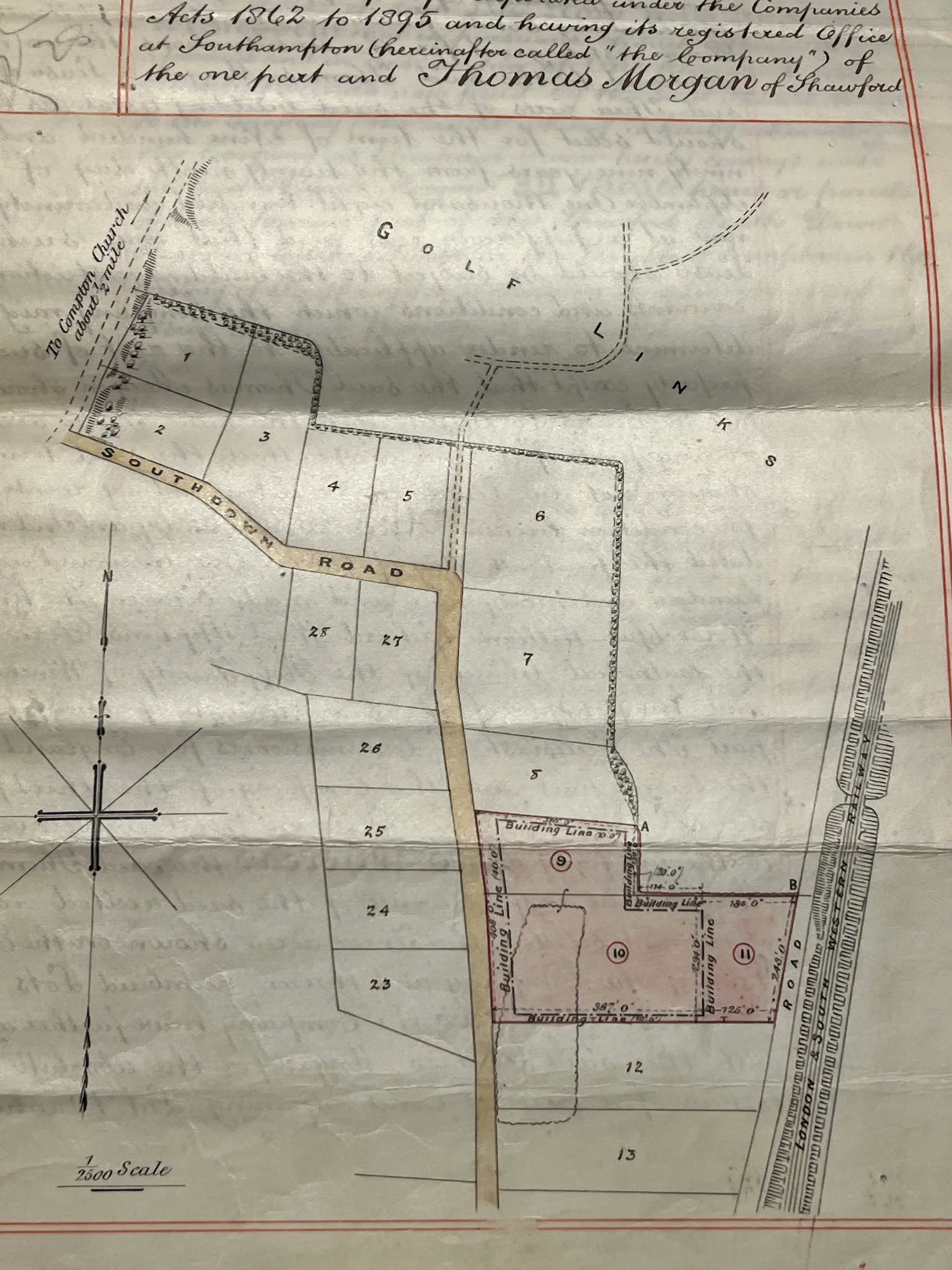
By 1900 three houses were being built on numbered plots of an acre or so – Southdown House, Fairfield and Kenwyn (now the flats known as Bishop’s Retreat) although none of these was occupied by the time of the 1901 census. The enumerator simply noted there was ‘a lot of building going on’. Thomas Morgan had his three acres plus – plots 9,10 and 11 – conveyed to him, but did not build any house: the conveyance stipulated he could not build more than one house per acre.
Richard Croker
The Origins of the Shawford South Down Estate – part 3
from the Compton & Shawford Parish Magazine for August 2026
This is the third episode of a series on the History of the Shawford South Down Estate based on Richard’s talk to the Local History Society.
By 1900 the first three houses were being built on the Shawford South Down Estate.
Southdown House, a handsome ‘villa’ property, was built and financed by Francis Bascomb, a Winchester builder, who seems to have sold it when completed to C J Flight, a military tailor who had inherited a large family business on Winchester High Street. Flight’s father Frederick was at this time living in Twyford. Bascomb would go on in the next five years to build three more houses on the estate in Fairfield Road: Abbot’s Lodge, Highcroft and Hill House.
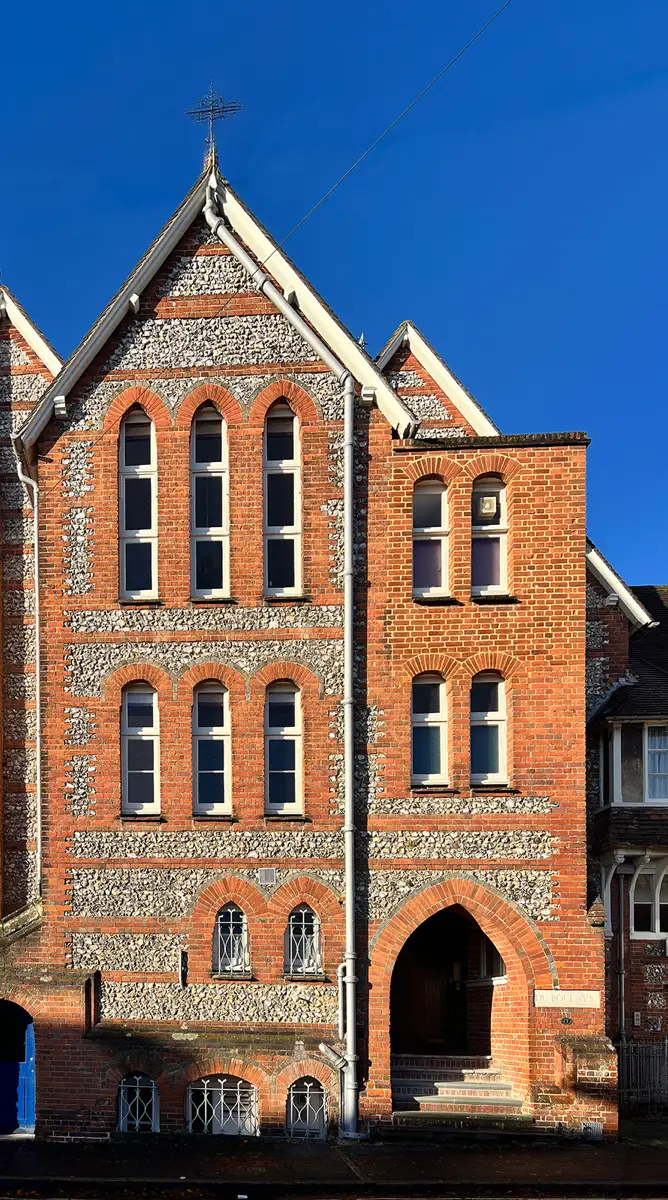

Kenwyn was commissioned by the Revd James T. H. Du Boulay a former housemaster at Winchester College who had reputedly financed and founded the college boarding house in Edgar Road which still bears his name. Kenwyn was named for his wife’s native village in Cornwall. This house is now the flats known as Bishop’s Retreat – although Du Boulay was an ordained clergyman he never seems to have had any parish to minister too, let alone a bishopric! The Du Boulay family are another Southdown family connected with India – the Reverend’s son James became private secretary to Lord Hardinge, the Viceroy from 1910-1916.
Fairfield seems to have been built as an investment for a Mr. Stephens from Southampton. It was later extended and acquired by the Fenwick sisters who were the first occupants of Abbot’s Lodge.
We don’t yet know the terms on which any of these plots of land were sold. If the deeds can be found, these might tell us.
In 1902 the imposing house now known as Southdown Court was built for a Mr. Hepherd, a Southampton solicitor who was one of the name partners in Hepherd, Winstanley & Pugh (the family firm of Nigel Pugh of this parish) which firm became part of Bond Pearce in 1998.
In 1903 there appears to have been an auction on the Estate – something similar had happened at the Bridge Hotel in Shawford in 1887 shortly after the Island development commenced. Such auctions were typically advertised as the last chance to acquire development plots on advantageous terms! A document produced to support it shows all the numbered plots of an acre or so to the north and east of Southdown Road down to what is now Avonmore as having been ‘sold’. This shows buildings only at Southdown Court, Southdown House and Kenwyn. None of these then empty plots saw any building activity in the next decade – some were still empty after WW2 – and it must be doubted whether they had truly been ‘sold’, or were simply being retained by the Company. Another plot is marked as ‘reserved’.
By 1908 Alfred Bowker’s sister Edith had built Colleton (now Sparrowgrove) – adjacent to her brother’s Malms property across the railway – for her own occupation following her fathers death and the sale of his estate at Lankhills. Her brother Alfred had built a house on the Main Road – now Silkstead Cottage – around the same time but, having no suitable accommodation at the Malms, seems to have lived with his sister henceforward. Miss Bowker had no made up road by which to access her property, as the then gravelled Southdown Road stopped well before Crossway.
With the exception of the houses in Fairfield Road developed by Bascomb immediately following the auction the only activity on the estate was further building on the east side of the Otterbourne Road and in what would become Grove Road. These houses included a series of semis designed by Colson which seem to have been buy to let properties commissioned by miscellaneous investors – including the Bowker family. No more houses than those already mentioned in the ‘interior’ of the estate were constructed until 1909, which means only 8 houses in total were constructed on Southdown and Fairfield Roads in the first 10 years of the project, on perhaps 8 -10 acres of land. It remains a puzzle why development was so slow, compared for example with the Island or the smaller area developed on Compton Down at the eastern end of Hurdle Way around the turn of the century. Based on what we know of other transactions locally the land for these houses would make no more than £250 an acre. Assuming that only any land really sold was built on, and even taking into account a number of successful sales adjoining the Otterbourne Road, it seems unlikely that these in total would give the original investors any profit – let alone their money back – on their £12,500! Perhaps they were playing a longer game?
As ever, researches continue. Please get in touch [via the contact form] if you have any information you think might be of interest.
Richard Croker
A History of the Shawford South Down Estate – Episode 4
From the Compton & Shawford Parish Magazine for August 2026. The fourth in a series of articles based on Richard Croker’s talk to the Local History Society.
The original acquisition had included Sparrowgrove Copse (clearly marked as woodland on the Heathcote map of 1735) and in 1903 this and the unwooded strip of land to the west of it up to the Otterbourne Road had been sold to the local Water Company.
It may well have been sold at a substantial profit, or it may not, as the Water Company seem only to have used a small part of it.
What is clear is that the original plan – as the map of the proposed estate roads from 1900 shows – had been to build houses on the Copse and it may well be this transaction that inadvertently saved this ancient woodland and its majestic swathes of bluebells from destruction in the 1900s.
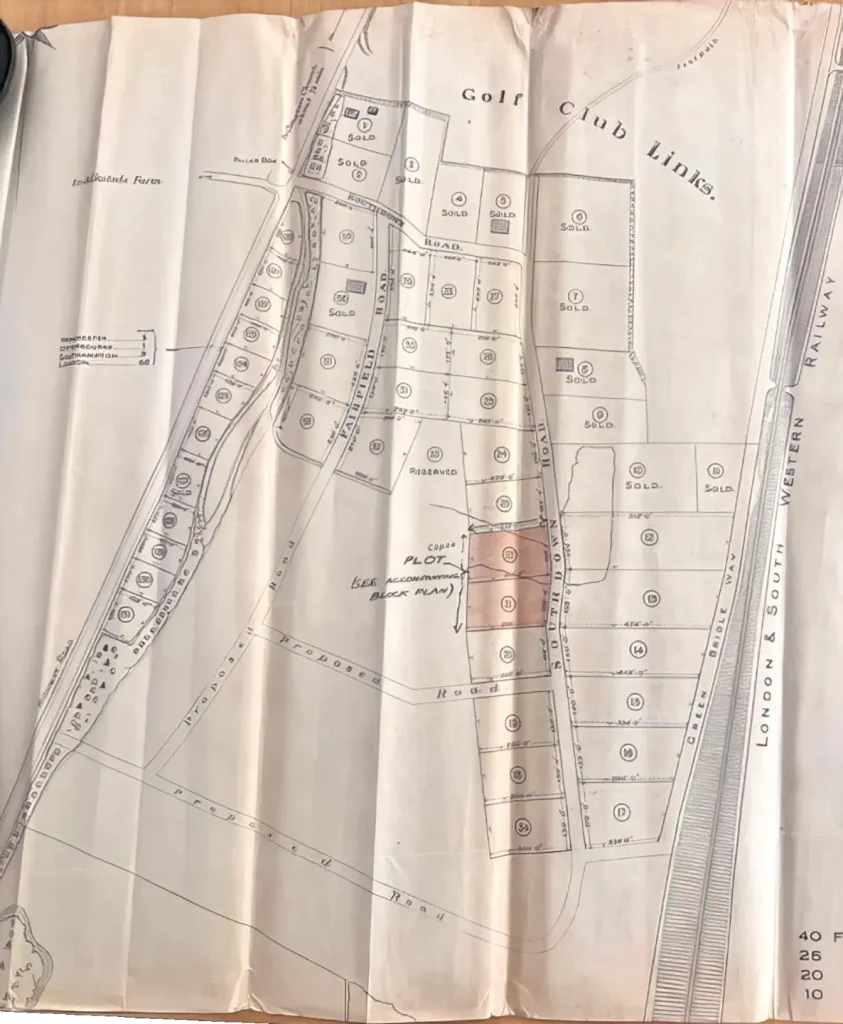
After this sale, the projected road layout of the Southdown Estate was revised to mirror what it is today, although not all the roads were made up until the 1980s.
There was a further burst of building – six houses – in 1909-1912 on the then lower part of Southdown Road and the eastern part of what would become Crossway.
One peculiar aspect of the development deserves to be mentioned here. At least two houses in this period – the only ones where I have seen the original conveyances – were built and paid for before the land on which they stood was transferred to the developer.
Seemingly the Company liked to retain title until the project was complete – and presumably the developers didn’t need to mortgage the property! It’s unlikely you would (or could!) build without taking title today.
The First World War seems to have brought new building to a stop, although some improvements were made to existing houses.
In January 1915 soldiers of the Royal Field Artillery were billeted around the neighbourhood – including in the Badminton Hall at Southdown House – and artillery was parked east of Fairfield Road as incessant rain at Christmas induced the authorities to call for 20,000 troops from the encampment on Morn Hill near Winchester to be rehoused at short notice.
An article in the Morning Post later in the year bemoaned the ‘mint of money’ made in the city from this extravagance, with excessive sums thrown at landladies and at working men to build billets, which made casual labour to serve the local worthies impossible to find!
More houses appeared in the 1920s and in succeeding decades as the vacant area between Southdown Road and Fairfield Road began to be ‘filled in’ and plots on the southern end of Southdown Road built on.
In 1924 the original Estate Company seems to have been wound up, with the existing estate roads being adopted by the County Council. Documents imply that William Carey Morgan and other shareholders (including H M Colebrook) acquired the remaining undeveloped land from the Company. Morgan had been the sole executor on the death in 1906 of his brother Thomas, who left an estate worth £31,000, a very significant sum at the time, which may have been placed in some sort of family trust.
William had employed the noted architect M H Baillie Scott to design a house at The Quinton in 1912 on the land his brother had acquired in 1901. By 1916 he himself moved there following the death of his wife and eldest sister, commissioning an extension to give him a substantial study on the ground floor. He was then in his 73rd year. At this time he also sold The Quinton – perhaps as trustee – to his daughters outright for the sum of £1800.
When he died in 1929 at 85, his daughters Margaret Muriel Carey Morgan and Dorothy Beatrice Carey Morgan – in 1911 recording their occupations as book binder and artist respectively – seem to have inherited his wider property and their names appear in later land transactions at Southdown. So it seems the Morgan family’s direct involvement bookended the life of the Estate Company itself.
A few more houses were built in the 1930s before war once again intervened. Crossway and the lower part of Fairfield Road was then developed en bloc in the 1950s and then in the late 1970s and 1980s the lower part of Southdown Road curving round to join Grove Road was also built on, largely by a single company.
Subsequently the older part of the Estate has seen recurrent bouts of rebuilding and infilling, and in 2026 there are upwards of 140 households The detailed history of the more recent period is yet to be written!
To be continued…..
The Origins of the South Down Estate part 5 – names and architecture
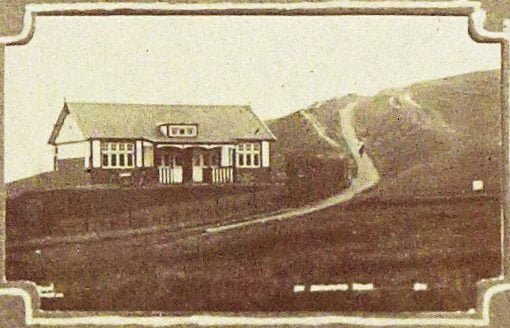
Tracing the early history of the Estate has revealed some interesting trends in house naming. A fashion for Celtic flavoured names before 1920 gave us Kenwyn, Innisfallen, Allandale, Beni Mora, Pendre – all since renamed, some multiple times – and Avonmore, which still survives unchanged from this period.
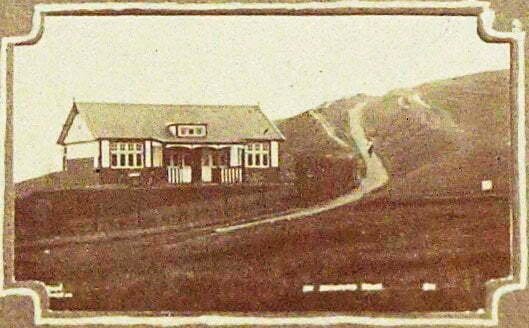
Abbot’s Lodge was originally called Golf Lodge – the golf course on the Down was a short walk away – but the Misses Fenwick who were the occupants by 1903 and were the daughters of the recently deceased rector of Abbotts Ann had the name changed to echo his old parish. Had they not done so it is possible to imagine some keen golfers assuming that their home was the clubhouse!
The Quinton derives from the latin for fifth. Thomas Morgan had been his parents fifth child and this seems likely to be why after his death the house built on his land was so named. Some old names for former fields on the Estate reappear in the 1930s and 40s, perhaps after Drew’s ‘History of Compton near Winchester’ ended with a plea that they be revived : among them Smoke Acre, Smallwood and Cartersland. Colleton is now Sparrowgrove : Tangley House was originally Sparrowgrove. The Downs House (formerly The Lynchets) is easily confused with The Down House on the Island in Shawford. And how did Southdown Road come to have both a Chinook and a Chinook Lodge?
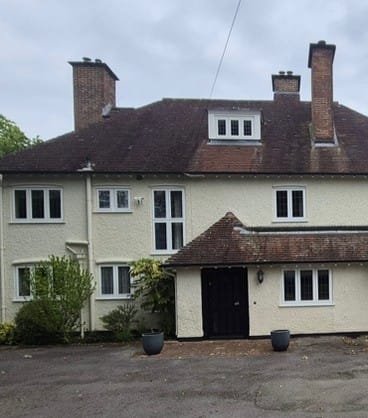
Architectural trends are also apparent . Many of the early houses were designed by Colson’s firm. They tend to be large squarish upright three storey brick houses, leaning to the Victorian, with tiled roofs and a mix of tile-hung and rendered external walls, with a striking incidence of verandas from which to enjoy their large gardens, in which a grass tennis court might be laid out. Some have distinctive sash windows with a large sheet of plate glass in the bottom half but four or six small panes in the top, which can also be seen in houses by the same firm on the Island and on Hurdle Way. There might be Arts & Crafts features such as ‘living halls’ with inglenook fireplaces and white painted internal woodwork, along with ornamental stained glass. These houses seem closely related to some in St Cross, where Colson began his career.
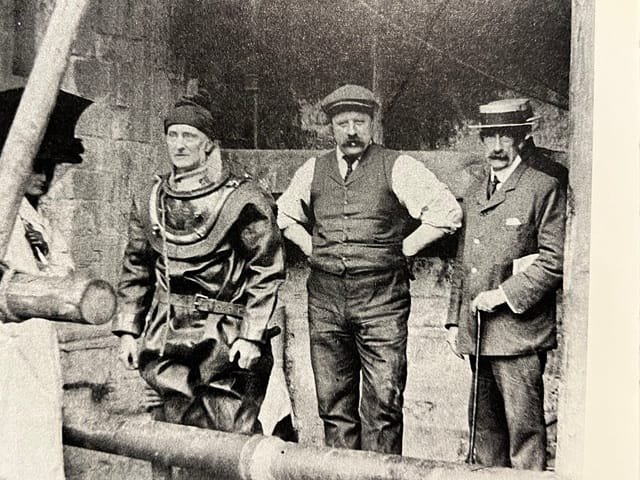
J B Colson as architect was heavily involved in the work from 1905 to shore up Winchester Cathedral – a photograph of him next to the diver William Walker shows a tired looking man. It was said that Colson had to present his crucial report to the Dean and Chapter on the full extent (and cost) of the work necessary on the morning on which his wife Emmeline had died – he was probably not then well himself and his commitment to Southdown at this time may understandably be in doubt.
After Colson had died in 1908, his firm seem to have had fewer commissions at Southdown although Greystone (now Southdown Grange, 1909) and Tangley House (completed 1915) are both recognisably Colson. The developer Francis Bascomb died in early 1910, the last of his four projects at Southdown – apparently designed by Messrs Meakin & Archer but looking like a Colson as were the previous three – having been completed in 1906. With Thomas Morgan also dead, there seems to have been both a lull in building and a change of direction in architectural terms.
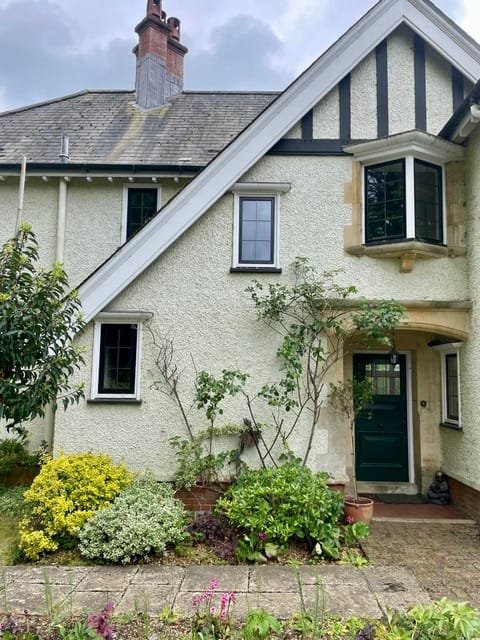
The clutch of houses designed by other architects and built around 1910 (including Coppice End, Avonmore, Lynsted (now Overcross House) and The Quinton) have a cottagey feel with striking Arts & Crafts characteristics such as steeply pitched roofs, thick roughcast render, leaded windows and elegant chimneys. The Quinton has exposed oak beams adorned with carved inscriptions in various languages including the Welsh words ‘Heb Dduw Dim = Dddw Digon’ (roughly translated as ‘with God plenty, without him nothing’), which words also appear on the Morgan gravestones in the churchyard at Compton, a clear nod to the family’s religious convictions.
Building on the Estate after 1920 was more varied in style – some examples continued the cottagey theme and others featured half timbering in a distinctly mock Tudor style typical of the inter war period. Immediately after WW2 the style of housing became more austere but most of those surviving houses on the estate which date to the 1950s and 60s have now been substantially altered. The sites of some of the earlier houses – the original Summerhill (1924), Smallwood (1920), Wildwood – have in recent years been completely redeveloped to accommodate more houses on their sites, but most of the pre-war houses are still going strong. Southgate, originally built in the large garden of Overcross House in the late sixties, has itself now gone but left its name to the Southgate Gardens houses built on its land. A more recent trend is the complete rebuild of a single house in a more contemporary style. What we want from our homes continues to change: after all, it isn’t 1909 (or 1968) any more!
I am proposing to conclude this series with a brief history of my own house and some of its occupants, a story which is in part rather melancholy. You might be surprised to know that nearly half of the houses on the South Down Estate were by 1920 owned and lived in by single women: only one had a husband who died in the War. If anyone has more information they are willing to share especially deeds, plans, photographs or other documents which might reveal information about the early years of the Estate, can they please get in touch.
Richard Croker